

Successful companies have one thing in common: powerful teams that work together constructively, support each other and pursue common goals. But well-functioning teams don't just happen by themselves. They need targeted team development that builds trust, strengthens communication and creates a sustainable basis for productive collaboration.
At a time when hybrid work models, agile methods and project-based structures are increasing, professional team building is becoming a decisive success factor. Companies that systematically invest in their teams benefit from greater innovative strength, better employee retention and sustainable productivity. But what exactly is team building and team development? Which methods and measures are really effective? And how can team development be sustainably integrated into everyday business life?
What is team building?
Team building refers to all measures aimed at strengthening cohesion within a group and improving cooperation. The central goal is to form a functioning team of individual employees that together achieve more than the sum of its individual parts.
Team building goals
The most important goals of team building measures include:
Build trust: Team members get to know each other better, develop mutual understanding and build a basis of trust, which is essential for constructive cooperation.
Improve communication: Open, clear communications is the basis of all successful teamwork. Team building creates spaces in which communication patterns become visible and can be improved.
Increase motivation: Shared experiences and successful experiences strengthen identification with the team and the company and increase intrinsic motivation.
Resolve conflicts constructively: Team building makes different perspectives visible and establishes mechanisms for constructive conflict resolution.
Distinction: team building vs. team development
The terms team building and team development are often used interchangeably, but describe different approaches. Team building usually focuses on individual measures and events that are intended to strengthen team cohesion, such as a joint workshop or a team trip. Team development, on the other hand, describes a longer-term, systematic process that aims to continuously improve a team's performance and collaboration.
Significance for modern work environments
Targeted team building is becoming increasingly important, particularly in hybrid and remote work environments. When team members no longer work in the same location on a daily basis, there is a lack of informal meetings and spontaneous coordination. Virtual team building measures and digital communication tools must fill this gap and create space for relationship building. Also in agile work environments, in which teams are put together on a project-by-project basis, rapid team building is essential for project success.
Team development: definition and basics
Team development is the systematic process by which a group of individuals becomes an efficient team. In contrast to one-off team building events, this is continuous development that covers all aspects of collaboration.
What does team development mean?
Team development includes the targeted design and promotion of processes that a team goes through in order to improve its performance. It includes developing common goals, values and working methods, clarifying roles and responsibilities, and establishing effective communication and decision-making structures.
Psychological and organizational aspects
From a psychological perspective, successful team development is based on findings of group dynamics and social psychology. Teams go through predictable development phases in which different dynamics take effect. Understanding these phases helps managers react appropriately and provide targeted support for the team.
From an organizational perspective, team development means the integration of teams into the corporate structure. It includes aligning team goals with strategic corporate goals, providing necessary resources, and creating frameworks that enable productive collaboration. Modern project management software such as ZEP supports this process by providing transparent distribution of tasks, clear responsibilities and efficient resource planning enables.
Why team development is a process, not an event
Many companies invest in individual team building events, such as a team trip or a one-day workshop. These measures can provide important impetus, but they do not replace systematic team development. Sustainable improvement results from continuous work on communication, collaboration and common goals.
Successful team development is integrated into everyday work. It is shown in regular retrospectives, constructive feedback rounds, more transparent project planning and continuous reflection on collaboration. Managers who see team development as an ongoing process create effective teams in the long term that master even difficult phases together.
The 5 phases of team development (according to Tuckman)
The most well-known model for team development comes from psychologist Bruce Tuckman, which, back in the 1960s, identified five characteristic phases that teams go through in their development. This phase model helps managers understand the dynamics in their team and provide targeted support.
Forming: Getting to know each other and getting oriented
In the first phase, team members come together and get to know each other. There is uncertainty about roles, expectations, and goals. Communication is polite and reserved, conflicts are avoided. Team members follow formal structures and seek guidance from the manager.
Typical challenges: Ambiguity about targets and roles, superficial communication, dependence on the manager
Success factors: Clear definition of goals, transparent distribution of roles, structured onboarding, space for getting to know each other personally
Storming: Conflicts and Role Clarification
During the storming phase, the first conflicts break out. Different working styles, opinions and personalities clash. Team members position themselves, power struggles can arise and the initial harmony gives way to tensions. This phase is critical but necessary for the development of a viable team.
Typical challenges: Open or covert conflicts, power struggles, declining motivation, questioning of leadership
Success factors: allowing and constructively resolving conflicts, clear communication rules, professional moderation, building trust
Norming: Common Values and Rules
When the storming phase is successfully completed, the team develops common values, standards and working methods. Roles have been clarified, responsibilities accepted. Communication is becoming more open and constructive, and a sense of togetherness is created. The team develops its own rituals and standards.
Typical challenges: balance between harmony and critical reflection, tendency towards complacency, exclusion of dissenting opinions
Success factors: define common rules of the game, feedback culture establish, value diversity, promote continuous improvement
Performing: Productive collaboration
During the performing phase, the team works at the highest level of performance. Cooperation runs smoothly, tasks are distributed in a self-organized manner and completed efficiently. The team can react flexibly to challenges, conflicts are resolved constructively, and communication is open and targeted.
Typical challenges: Decreasing attention to team development, routine instead of innovation, neglect of new team members
Success factors: Continuous reflection, space for innovation, integration of new members, recognition of successes
Adjourning: Conclusion and reflection
The fifth phase describes the completion of team work, for example at the end of a project or when a team breaks up. This phase is often underestimated, but is important for processing shared experiences and transferring knowledge.
Typical challenges: Emotional processing, loss of relationships, unclear perspectives, lack of closure
Success factors: Structured final reflection, recognition of joint achievements, document lessons learned, maintain a network
Team development methods and measures
There are various methods and measures available for successful team development, which can be used depending on the team phase, objectives and context.
Classic methods
Workshops and seminars: Structured formats in which teams work together on specific topics, such as communication, conflict resolution or strategic orientation. Workshops combine theoretical inputs with practical exercises and create space for intensive discussion.
Group tasks and simulations: Joint tasks, which can only be solved through collaboration, make team dynamics visible and train cooperative behavior. Simulations make it possible to practice situations that would be too risky in real working life.
Feedback rounds and retrospectives: Regular reflection on cooperation is one of the most effective team development measures. In retrospectives, the team analyses what worked well, what can be improved, and which concrete steps follow next.
Outdoor and adventure formats
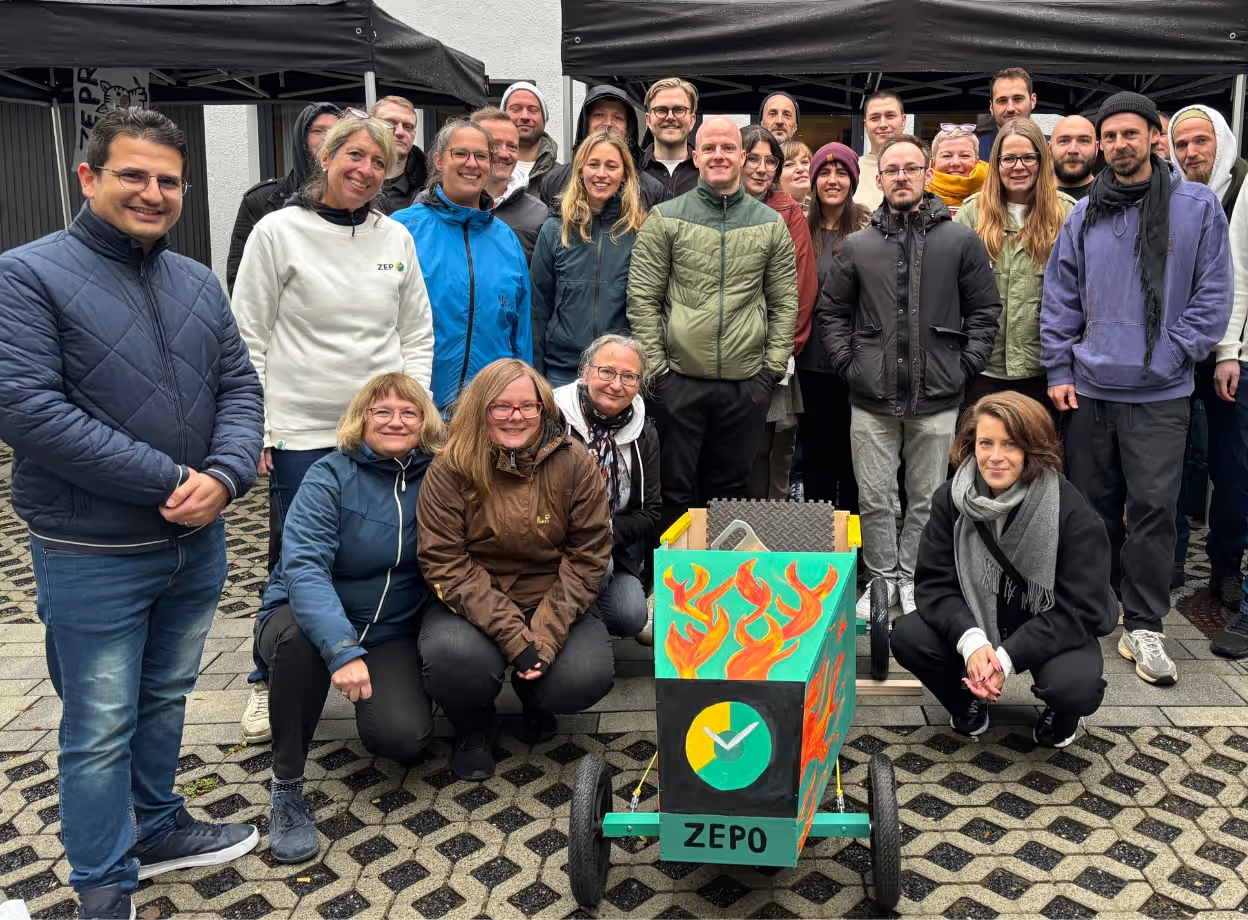
Outdoor measures focus on shared experiences outside of everyday working life. Whether climbing, canoeing or building soap boxes, such activities create intensive shared experiences that build trust and strengthen team dynamics. However, the transfer to everyday working life is only successful if the experiences are specifically reflected on and linked to specific work topics.
Digital team building tools
Remote and hybrid teams need special formats. Virtual team building exercises, digital escape rooms or online workshops can also create connections at a distance. Conscious design is crucial: Digital formats require a clearer structure, shorter units and more breaks than face-to-face formats.
Project management tools also play an important role in team development in distributed teams. Transparent task management, clear responsibilities and comprehensible work processes create trust and reliability, even if the team is not working in the same location.
Coaching and moderation methods for managers
Managers can actively promote team development through targeted moderation and coaching methods. This includes systemic questioning techniques that encourage the team to reflect on themselves, conflict moderation using established procedures, or coaching discussions with individual team members. External coaches or consultants can offer valuable support, particularly in critical phases or in the event of deadlocked conflicts.
Examples and exercises for team building
Successful team development depends on concrete measures that suit the respective team and its development phase. Here are a few tried and tested examples and exercises.
Practical examples of successful measures
Structured onboarding of new teams: A consulting firm established a two-day onboarding for newly assembled project teams. The first day focused on getting to know each other, clarifying roles and setting common goals. The second day was spent defining working methods, communication rules and decision-making processes. At the beginning, this investment paid off in terms of significantly faster working capacity and fewer conflicts.
Regular team retrospectives: An IT company introduced bi-weekly retrospectives in which the team reflected on what went well, what could be improved and what concrete measures will follow. This continuous reflection led to noticeable improvements in communication and collaboration and was appreciated by employees as an important contribution to team culture.
Interdepartmental workshops: A medium-sized company organized workshops on a quarterly basis, in which various departments worked together on overarching challenges. These workshops not only improved mutual understanding, but also led to concrete process improvements at interfaces.
Short exercises for meetings or retrospectives
Check-in rounds: At the start of a meeting, each team member shares in 30 seconds how they are doing and with what energy they start the meeting. This simple exercise creates connection and makes sensitivities transparent.
Appreciation Round: At the end of a project or an intensive phase, each team member thanks someone else for a specific contribution. This exercise strengthens appreciation and makes achievements visible.
Change of perspective: During deadlocked discussions, team members consciously take on someone else's position. This change of perspective promotes empathy and opens up new solutions.
Team timeline: Together, the team visualizes the most important milestones, successes and challenges of recent months. This exercise creates common understanding and honors what has been achieved.
Long-term development programs
For sustainable team development, long-term programs are more effective than individual measures. A structured development program over six to twelve months can combine various formats: workshop modules on specific topics, accompanying coaching, peer learning sessions and regular reflection appointments. Continuous support makes it possible to integrate findings into everyday working life and achieve sustainable behavioral changes.
How to choose the right team development measures
The selection of suitable team development measures depends on various factors. A systematic analysis helps to identify effective and tailored formats.
Analyzing team size, goals, and challenges
Team size: Small teams of three to five people benefit from intensive coaching formats and can quickly reach sustainable agreements. Larger teams of ten people or more need more structured formats and, if necessary, work in sub-groups.
Development phase: Teams in the forming phase primarily need structure, clarity and space to get to know each other. Teams in the storming phase need assistance in resolving the conflict. Teams in the performing phase benefit from impulses for innovation and continuous improvement.
Specific challenges: Identify the specific topics that concern the team. Is it about communication issues? Unclear roles? Lack of trust? Different work cultures in hybrid settings? The measures should address the identified challenges directly.
Alignment with corporate values and leadership culture
Team development only works if it fits the corporate culture and the understanding of leadership. A hierarchically managed company will need different formats than an agile start-up. Measures that promote self-organization require managers who are prepared to hand over responsibility. Consider whether your corporate culture supports the desired changes, or whether development is also necessary here.
Cost-benefit considerations
Team development is an investment that pays off in the long term. However, there should be a reasonable balance between effort and expected benefits.
Modern time tracking and project management tools such as ZEP support team development with little additional effort. Transparent resource planning, clear project structures and comprehensible distribution of work create trust and clarity in the team. Integration into existing systems such as DATEV or Lexware enables continuous processes without media breaks, which reduces friction losses and creates more time for content collaboration.
Best practices for sustainable team development
Successful team development follows proven principles that go beyond individual measures.
Continuity instead of one-time action
Team development has the greatest effect when it is continuous. Individual events can provide impetus, but sustainable change requires time and repetition. Establish regular formats, such as monthly retrospectives, quarterly workshops, or annual team offsites. These rhythms create reliability and make it possible to accompany development over longer periods of time.
Integration into everyday working life
Team development should not be seen as an add-on to everyday working life, but as an integral part of good collaboration. Create rituals that enable reflection and exchange: regular check-ins at the start of meetings, structured feedback rounds, joint learning times, or peer feedback sessions. The more natural these formats become, the more sustainable they are.
Feedback mechanisms and performance measurement
Establish mechanisms that make it visible how team collaboration develops. These can be anonymous Team Pulse surveys, structured feedback rounds or regular self-assessments based on defined criteria. Quantitative indicators such as project runtimes, error rates or employee retention can also provide information on the quality of cooperation.
Document findings from retrospectives and regularly check whether agreed measures have been implemented. This consequence shows that team development is taken seriously and promotes team commitment.
Modern project controlling functions help to objectively evaluate team performance. When projects are planned in a structured manner, expenses are recorded transparently and workloads are visualized, valid data bases for team development are created. They can identify where overload is occurring, which projects are doing particularly well, and where structural problems may be hindering collaboration.
Role of manager
Managers play a key role in team development. They shape team culture through their behavior, create framework conditions for good cooperation and moderate development processes. Successful managers see team development as a continuous task and actively invest in the development of their team.
In concrete terms, this means addressing conflicts early instead of sitting them out, giving and obtaining feedback regularly, creating space for reflection and relinquishing responsibility when the team is ready for it. Leaders should also be prepared to reflect on their own behavior and develop themselves. A team only gets as good as the leadership allows it to be.
conclusion
Team building and team development are not nice-to-have topics, but decisive success factors for modern companies. Strong teams are characterized by trust, open communication and the ability to overcome challenges together and learn continuously.
Successful team development is not a one-time event, but a continuous process. Teams go through predictable development phases that require different levels of support. Managers who understand these dynamics and provide targeted support create the basis for sustainable high performance.
The right methods and measures depend on the specific situation. While small teams benefit from intensive coaching, larger teams need structured formats. Remote teams need different approaches than co-located teams. The consistent integration of team development into everyday work, supported by clear structures, transparent processes and modern tools that make collaboration easier rather than difficult, is crucial.
Invest in your teams. The time and resources you put into team development often pay off in terms of higher productivity, better results, lower turnover and, last but not least, happier employees who enjoy coming to work.
FAQs
What is the difference between team building and team development?
Team building refers to individual measures and events that are intended to strengthen team cohesion, such as workshops or joint activities. Team development is a longer-term, systematic process that continuously improves performance and collaboration and covers all aspects of team dynamics.
What phases does a team go through in its development?
Based on Bruce Tuckman's model, teams go through five phases: Forming (getting to know each other and finding your way around) Storming (conflicts and role clarification), Norming (common values and rules), Performing (productive high performance) and Adjourning (Conclusion and reflection). Each phase requires different leadership and support.
Which team development measures are particularly effective?
Regular retrospectives for continuous improvement, structured onboarding formats for new teams and long-term development programs over six to twelve months are particularly effective. Integration into everyday working life instead of one-off events, supported by transparent project structures and clear communication processes, is crucial.
How do you promote team building in remote and hybrid teams?
Virtual teams need consciously designed digital formats with a clear structure, shorter units and more breaks than face-to-face formats. Transparent project management tools create trust through comprehensible distribution of tasks and clear responsibilities. Regular virtual check-ins and structured online retrospectives replace informal meetings in the office.
How do you constructively resolve conflicts in team development?
Conflicts during the storming phase are normal and necessary for the development of sustainable teams. Managers should address conflicts early on, establish clear communication rules and offer professional moderation. Systemic questioning techniques help the team to reflect on themselves; external coaching can be useful in deadlocked situations.
How do I select the appropriate team building measures for my team?
First, analyze team size, development phase, and specific challenges. Teams in the forming phase need structure and familiarization, teams in the storming phase need conflict clarification, teams in the performing phase need impulses to innovate. Check whether the measures fit the corporate culture and whether the effort and expected benefits are in a reasonable balance.